In brief
- "Legit" does not mean "always wins": an honest signal channel still loses trades.
- A channel you cannot check is one to avoid. Every signal needs its entry, stop and targets, posted with the time, before the move.
- Red flags: no stop, signals edited or deleted, results shown as screenshots, promises about profit, and offers to trade your account.
- You can check a channel yourself: a month of its signals, written down and compared with a chart.
- Find out who runs it, and whether the law where they are asks them to be registered.
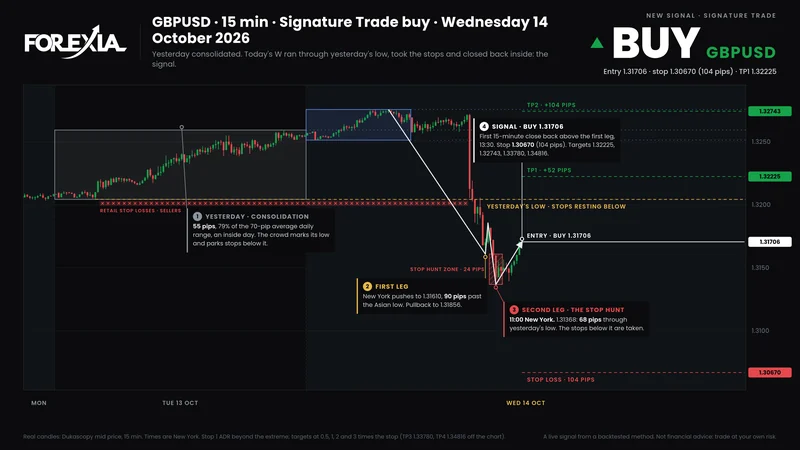
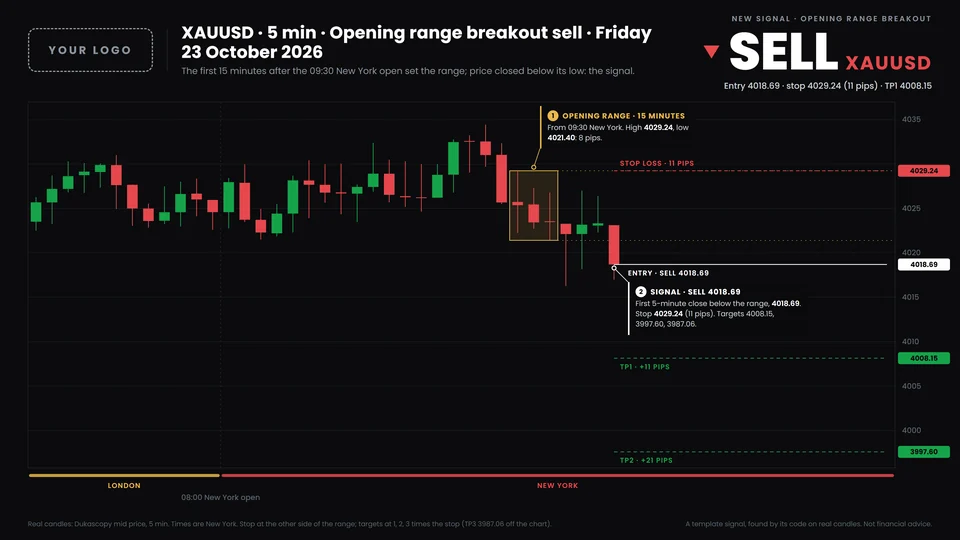
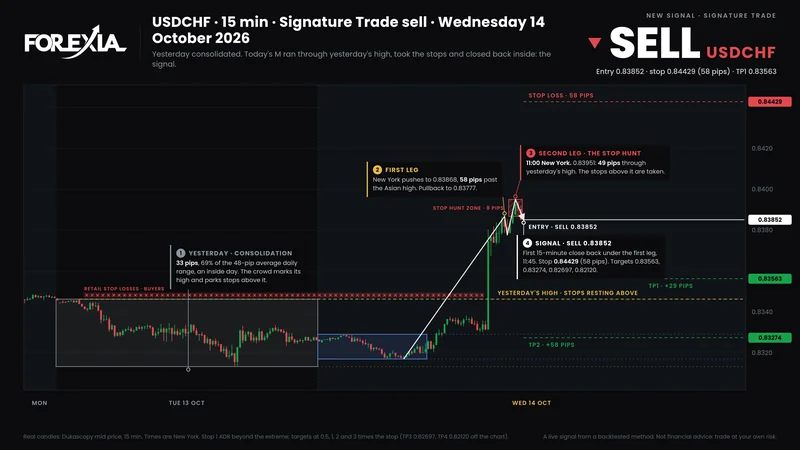
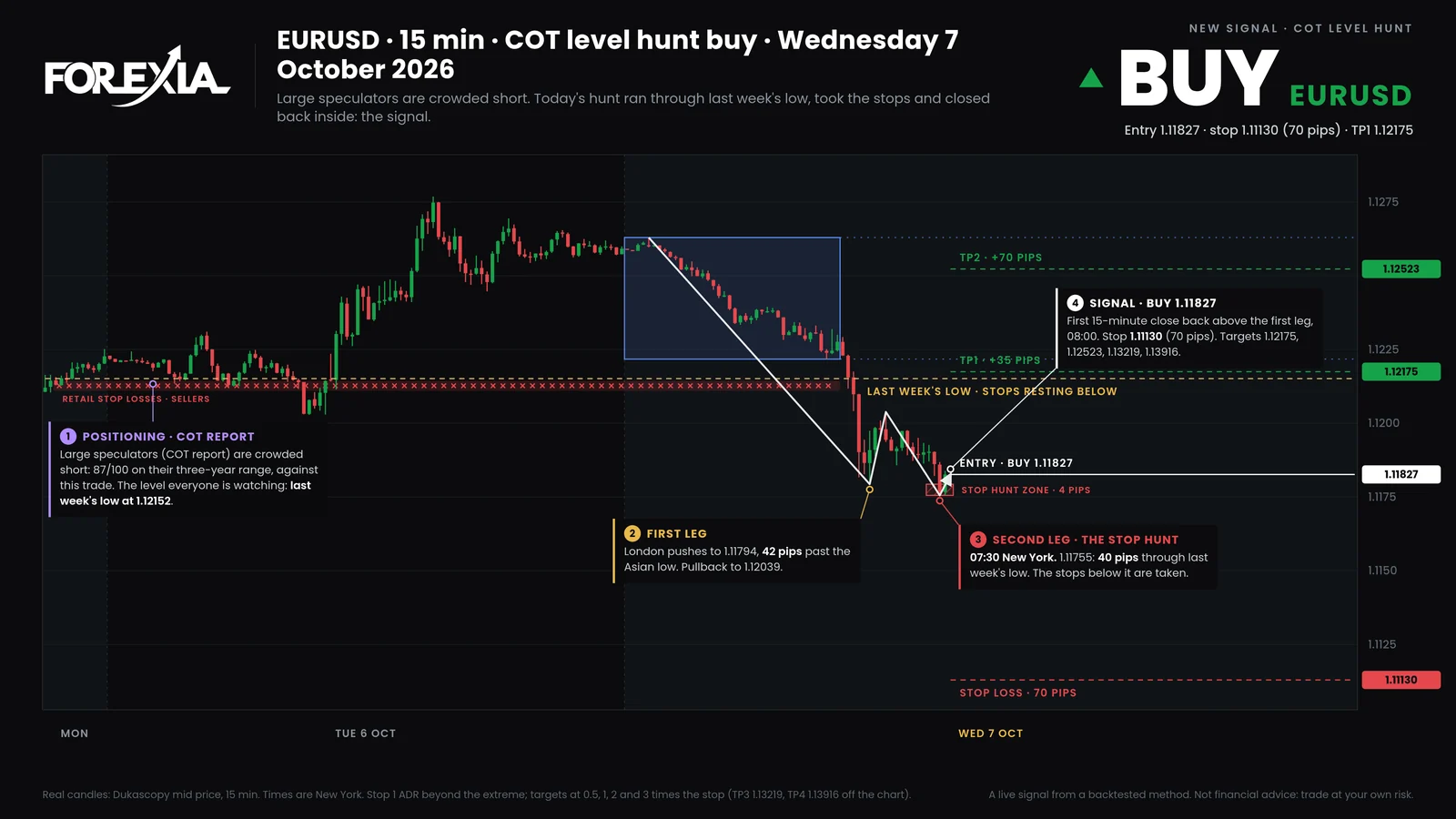
We run Forexia's signal channels with our bot, and we publish every free-channel signal with its outcome. So here is the question from the other side of the screen: how to tell a signal channel worth your time from one that is not. The signal at the top of this page became one of our losses. It stays on the record, and that is the first thing to look for.
The short answer
Some signal channels are run honestly; many are not. A lot of free channels earn their money from something other than the signals: a broker that pays them for every lot their followers trade, or a paid channel sold on the free one's best trades. And an honest channel still loses: no set of rules wins every trade, and a good month says nothing certain about the next.
So "is it legit?" is really "can I check it?" A channel that posts every signal in full, before the move, and keeps every outcome, can be checked. One that does not, cannot, whatever its screenshots say.
Red flags
- No stop loss. A signal without a stop cannot be sized, and can be called a win later whatever happened.
- Signals that change. Telegram lets admins edit and delete messages. An edit shows as "edited"; a deletion leaves no trace. A channel that does either cannot be audited.
- Results as screenshots. A screenshot shows one account and one trade, possibly a demo account, and nothing about the signals you did not see.
- Promises. Accuracy percentages, monthly returns, "we never lose". Nobody can promise what the market will do.
- "Send us your login." An offer to trade your account for you hands a stranger your money; managing other people's money is regulated in most countries.
- Pressure to open an account at one broker. Often the channel is paid on what you trade, win or lose, which rewards more signals rather than better ones.
- Nobody behind it. No name, no company, no way to reach anyone.
What an honest channel shows
- Every signal before the move: the market, the direction, the entry, the stop and the targets, with the time.
- Every signal followed to its end in the same thread: each target, the stop, or a time limit.
- A record of every signal, losses included, and how it is counted.
- A risk warning, and who runs it.
Ours, as an example. Since 4 October 2026 the free channel has had 5 signals: 3 still open, 1 closed at a target, 1 closed at the stop after a target. Each has its own page with the chart the bot posted, the checks it passed and every update; nothing is edited or deleted after the fact, and How we count says how each is scored. The loss at the top of this page is the EURUSD buy of 7 October 2026: TP1, then the stop. The bot's closing message said "Closed. Furthest target hit: TP1 (+35 pips).", because it counts a signal at the furthest target it reached; a position held whole lost the 70-pip stop, and the signal's page says so.
Check a channel yourself
It takes an evening, and it is the only way to know.
- Go back a month, or at least twenty signals, and write each one down: time, market, direction, entry, stop, targets.
- Check each on a chart in the channel's time zone. Did price trade at the entry after the signal was posted? Which came first, the stop or a target? Use a short timeframe, such as 5 minutes, around each level.
- Count every signal the same way, with the stop never moved: the furthest target reached before the stop, or a loss. Decide before you start how you count a signal that reached TP1 and then the stop.
- Add it up in R as well as pips. R is a result divided by the stop's distance: a 50-pip gain on a 25-pip stop is 2R. It lets you compare channels whose stops differ in size.
- Compare it with what the channel says about itself.
- Look for gaps: quiet days after a loss, signals posted after the move had started, messages marked edited.
Check who is behind it
A real name and a way to reach someone are the minimum. In several countries, giving trading advice for pay is a regulated activity, and regulators keep public registers of who is authorised. Our guide for channel owners sets out where the rules come from; as a subscriber, the same rules tell you what to ask.
Are they worth it?
Only if three things hold: a record you have checked yourself, costs you have counted (the spread and commissions on every trade, and any subscription), and your own ability to follow the signals as posted, on time, with the stop and a size you worked out. If you are new, start by reading signals before you trade them: How to read forex signals goes through one line by line.
Our free Telegram channel gets up to six signals a month, each with its chart, so you can check us the same way before deciding anything.